
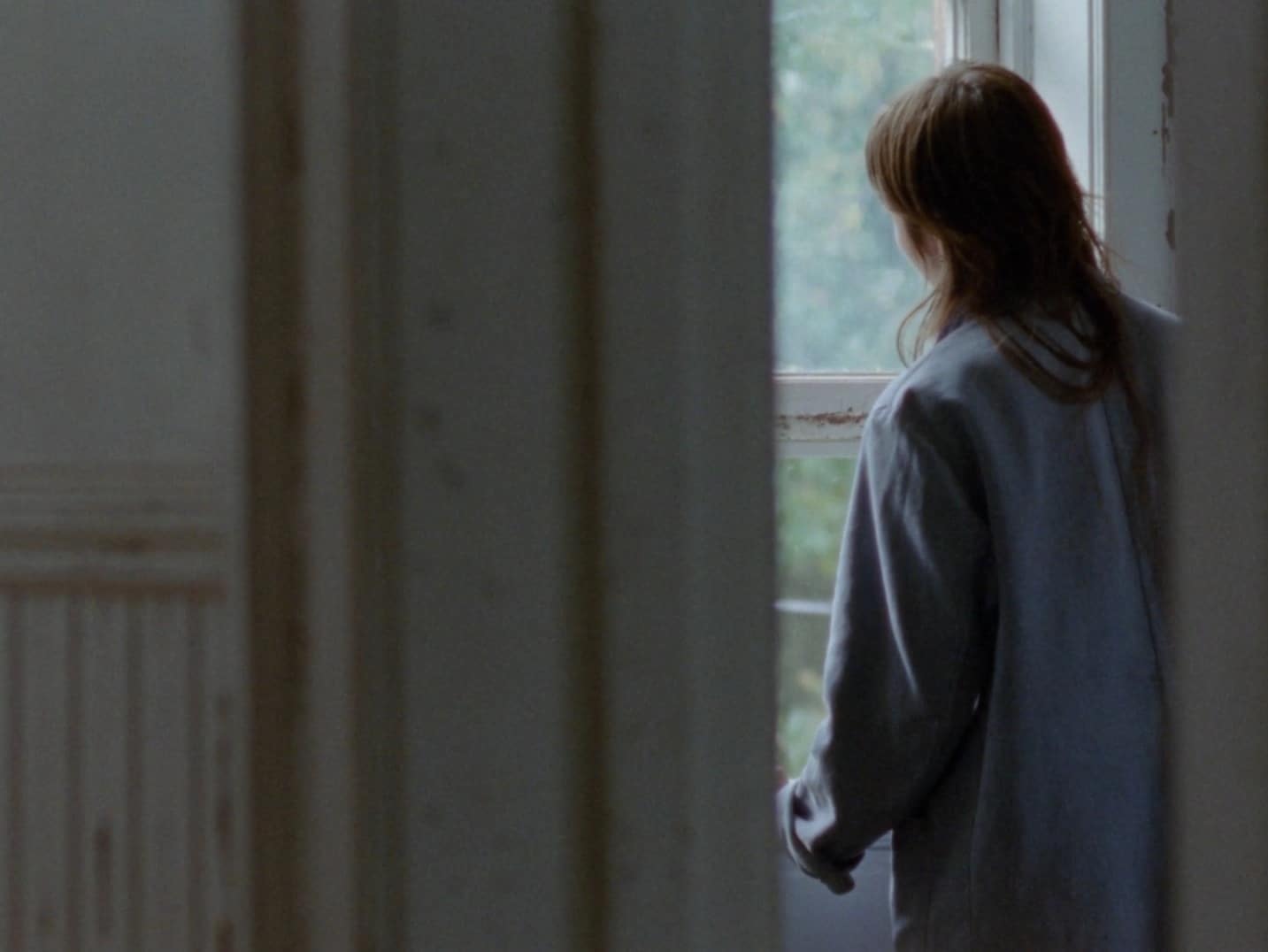
No matter how acquainted you may be with experimental cinema, it can always surprise you, which is one of the pleasures of persistently seeking it out. Unbound from conventional narrative and stifling oversight, avant-garde shorts may ask us to look more closely and intensely at an image, a figure, or a concept previously accepted or understood in social consciousness. The radical form can unearth hidden dimensions of a place, too, and relay a sense of deep emotion that wouldn’t be translatable through the reading of a text.
These qualities define Milwaukee educator and filmmaker Ben Balcom’s latest 13-and-a-half-minute elegiac work, The Phalanx (2025), which is making its Madison premiere at the 2026 Wisconsin Film Festival as part of the “Algorithmic Nudes and Other Experimental Shorts from Wisconsin’s Own” program at the Chazen Museum of Art on Sunday, April 12, at 1:30 p.m. At the time of publication, advance tickets are still available.
With this resonant hauntological film, Balcom intends to “trace the fragility of harmony, the dream of life in association, the frictions that give way to fracture” in the short-lived agrarian commune, Ceresco (or Wisconsin Phalanx), in the town of Ripon, Wisconsin, between the years of 1844 and 1850. Balcom’s thoughtful integration of aesthetics from the essay film, historical documentary, and video poetry also further celebrate the flawed human ideals of this communal experiment, interrogating and extrapolating views of legacy.
The Phalanx follows in a series of other experimental works in Balcom’s oeuvre that center shuttered institutions, like the Black Mountain experimental college (that existed between 1933 through 1957 in North Carolina) in the 10-minute Looking Backward, a 2023 Wisconsin Film Festival selection. The impression of The Phalanx, though, seems to seize the most beautifully abstract and probing concerns of the filmmaker’s prior work, while elevating them together to question the reality of shared purpose—or, perhaps what arcing line there is to draw between a past, present, and future of Wisconsin, of country, of humanity.
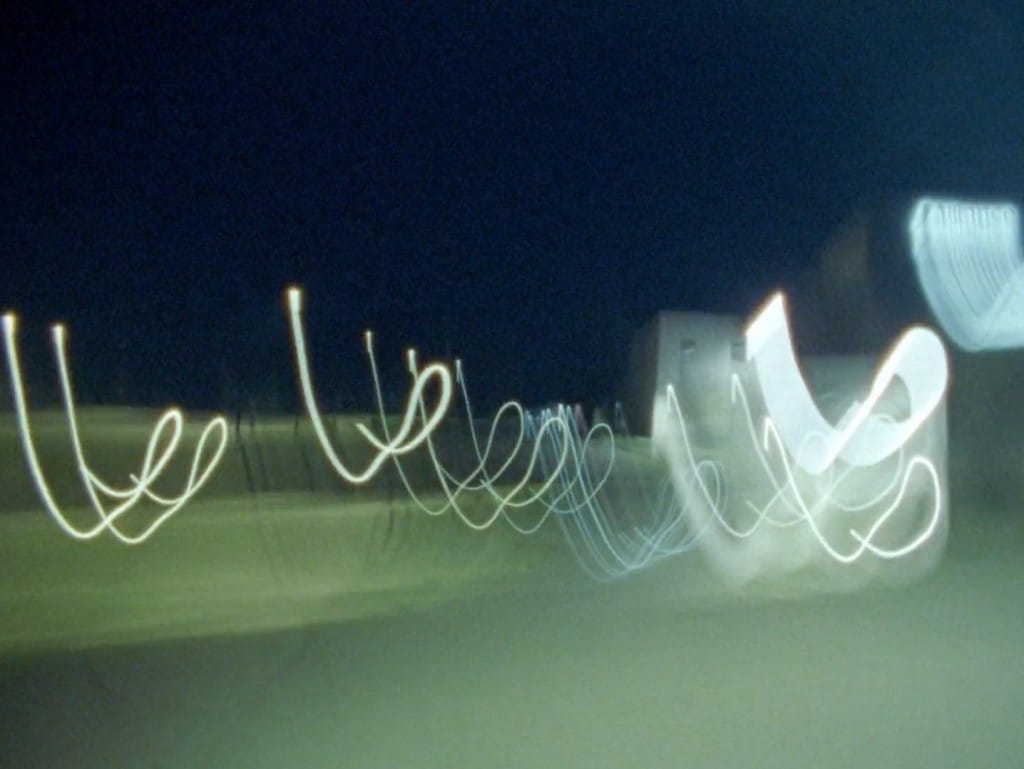
It’s really one of this decade’s most intriguing experimental films, equally appealing to the left and right brain, situating itself to articulate a significant sliver of Wisconsin history but also spiraling out into the existential and cosmic out-of-bounds. The concluding moments of the film surge beyond the visible spectrum, as if the communards, the town, and the filmmaker themselves all become lost to time and mere comprehension in dancing neon light trails.
Ahead of Balcom’s in-person appearance in Madison during the Festival, Tone Madison talked with him on March 15 via phone in an extended, hour-long conversation. We touched upon the impact of Balcom’s college tenure on his filmmaking, the catalyst of Dan Kaufman’s The Fall Of Wisconsin on The Phalanx, hauntological notions, entangling the historical and personal, feelings about the commune as a revolutionary paradigm, shared expressions between the experimental film community in Milwaukee, future projects with partner and fellow artist Sam Drake, and more.
Editor’s note: This interview has been edited for clarity.
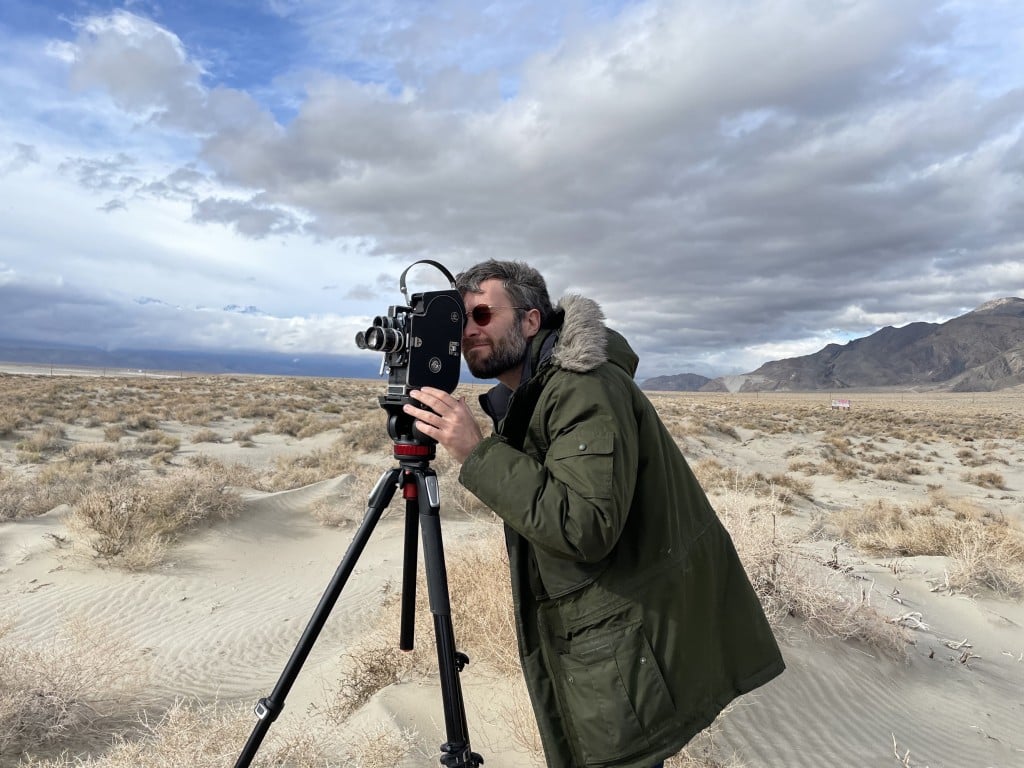
Tone Madison: I’d like to give readers an overview of your work and fascinations as a filmmaker, at least in some succinct fashion, because there’s so much to unpack in your approach to what we’d call the “experimental historical documentary.”
Both The Phalanx and Looking Backward are hauntological in their examinations of utopian socialist enclaves. In The Phalanx, you’re looking at artifacts and the physical spaces of Ceresco (Wisconsin Phalanx) in Ripon, Wisconsin; and then, in Looking Backward, you’re doing the same with the Black Mountain experimental college in North Carolina. And those are just two examples. More broadly, what has inspired your interest in these cultural niches through a filmmaker’s lens? What brought you to the Ripon area initially?
Ben Balcom: Each particular film has its roots in a slightly different set of concerns for me personally. I’ll start by saying both locations are, to some extent, motivated by autobiographical facts of my life, biographical realities. Also, conceptual interests. I happened to study at [Hampshire College] when I was getting my Bachelor’s degree. [That’s] in Western Massachusetts, and is a school that modeled itself directly on the legacy of Black Mountain. Which is when I first came to know about Black Mountain’s legacy. At that point, I knew of it just as a direct democratic experiment in pedagogy where students were involved in the formation of school policy, so on and so forth. Hampshire had a vestige of those ideas at work.
While coming into myself as an artist, someone who has long been a student of what we’d call the “New American Cinema” or canon of North American experimental film—[I realized] the influence of the Black Mountain school of poetics or poetry had such a direct impact on those filmmakers and poets of that generation. [They were in] such sustained dialogue with one another that the legacy of the institution, [the] artistic, cultural, communal phenomenon, has long continued to be of direct interest to me. So, on some level, [Looking Backward] is a way of gesturing towards lingering and longstanding fascinations and obsessions and interest in art-making that originally inspired me to make this kind of film and continues to inspire me in terms of understanding a critical approach to poetics that I think is integral to experimental film….
[Looking Backward] is both an homage and an elegy and an acknowledgement of the failures of both of these projects: the school, though a failure that was significant, impactful, and continues to be resonant and inspiring, and then the failure of that modernist poetic mode or figure, maybe.
The Phalanx comes out of a series of films that were made in a sustained way, [where I made] a concerted effort to engage with what was fascinating to me about Wisconsin political history. So I made a couple other films that were inspired by Milwaukee’s socialist past, the state’s general progressive past, and any political movements that defined the previous version of the state. My ongoing efforts [were] to try to find spaces that could monumentalize that history, one that I think is erased from spirit. It’s latent in space but seems to have been erased from people’s political imagination. Milwaukee enjoyed 40 years of socialist governance, and the state itself is the home of a party that once was defined by abolitionism and progressivism. Obviously, the state had such remarkable impacts in terms of labor rights, labor organizing, and progressive labor politics, which is no longer the case. Those things have obviously been dismantled so thoroughly.
In my ongoing effort to find spaces that symbolize that long arc of history in the state, I found myself reading this wonderful book by Dan Kaufman called The Fall Of Wisconsin, which begins with a brief portrait of the community in Ceresco. Given my interest in short-lived communities that had radical aspiration, and communities underwritten by literary aspiration, I just thought, “OK, this community sounds so fascinating. I’ve gotta go to Ripon and get a sense of what it’s all about. How can I find a way to pull that history out from the landscape?”
Tone Madison: What year did you initially go to Ripon? Was this developed over a series of years or in a more contained time?
Ben Balcom: [The Phalanx] was two years in the making. I had finished a film called Growing Up Absurd (2023), which was more of a follow-up to Looking Backward in that it was also about an experimental educational community. It was a very exciting project, a collaboration [with Julie Niemi] made in part as a commission. It was a fast film to materialize. So, then it took me two years to articulate the shape of The Phalanx. I went there at first sometime in 2023, just as a way of visiting the town, getting a sense of what it looked like, and then I’d go back many times to film and engage with the archive at the Ripon Historical Society, tried to interview people and meet people, etc.
Tone Madison: That’s perfect. That’s kind of my next question, actually, about the structure and assembly of The Phalanx. This is made up of—it’s not like you can neatly define what this is; that’s why I’m adding “experimental” to the “historical documentary” label. Because you have your own sun-glassed landscape footage on 16mm, and then you have the dramatization of the group of people in The Phalanx house. You have archival photos, and then also have people reading letters in voiceover. Was there a particular moment when everything sort of clicked together in the edit? Or was it very gradual?
Ben Balcom: It was pretty gradual…. The first visit was really cursory; I had never been to Ripon before. I was just going to go to the schoolhouse where the Republican Party was founded. [I thought,] “I’ll go see the space of the longhouse and go to the park where there’s a historical marker that names the Ceresco community.”
Over the two years of my visiting there, that historical marker that used to stand in the park across from the building or the site of the longhouse that the members of the Wisconsin Phalanx inhabited—that historical marker disappeared and has never been replaced. So, over the two years that I was going there, there was this either accidental or very intentional erasure of this rather minor and pretty innocuous history. [chuckles]
So, the first visit was just pure curiosity [and] site survey. And after the second or third [trips], I’d always go with a camera, most of the time filming the building that stands on the side of the former longhouse. Which is not the original building per se. It’s pretty close—the original building burnt down, then it was rebuilt, and then significantly renovated again. Obviously, it’s been parceled out into individual living units, so it’s not structured in any way like the original longhouse building would have been.
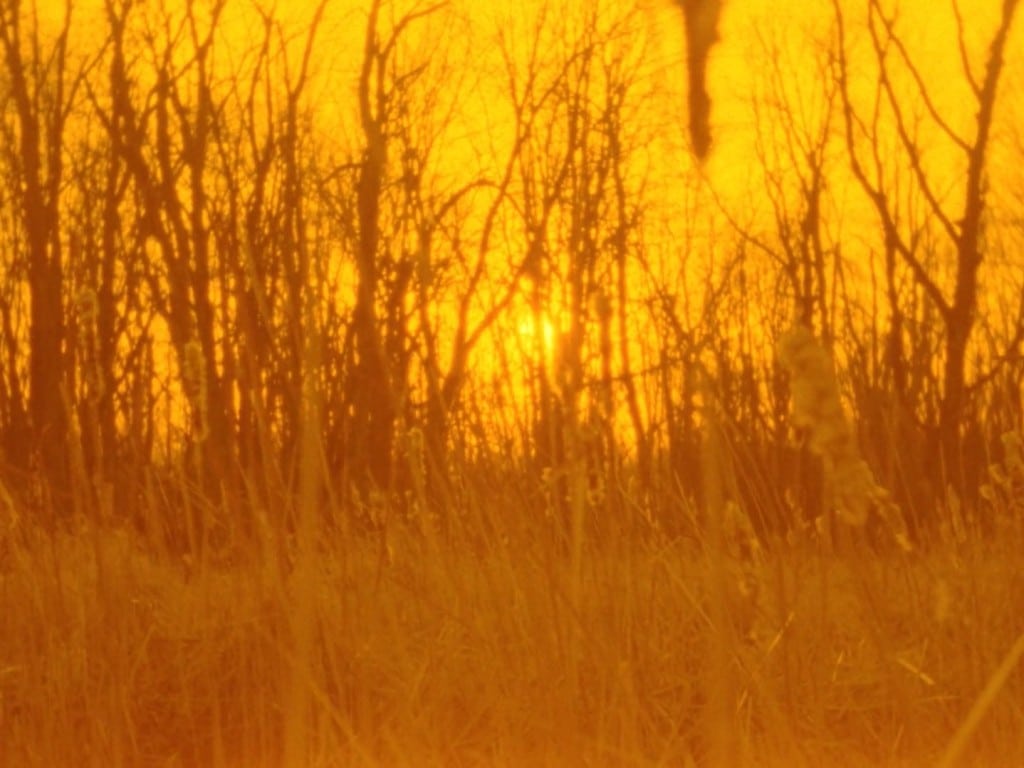
I will admit that none of the spaces were particularly easy to film… But this is a challenge that really interests me as a filmmaker: the challenge of “empty space” or the question about whether or not the camera and its mere presence in space can index a historical trace or, as you gestured towards, the latency or the presence of a ghost past. A past that haunts the space. Can that be transmitted purely by the presence of the camera? I’m very fascinated by this.
I went to meet with folks at the [Ripon] Historical Society, and I explored documents and photographed some of them. I took copies of documents home with me, which I would then sort or use to write and sketch out what I first thought would figure into reenactments or performances. And then there was the longstanding question of “Do I take a more conventional documentary approach and talk to people who live in the building and hear about their understanding of the history or lack thereof?” I thought interviews could play a part of something a little bit more conventionally essayistic.
But, truth be told, people did not want to participate. In my first few visits, I’d have perfectly friendly conversations with people who lived in or around the building. And then I tried to follow up to potentially film inside their homes or record interviews. People’s interest waned pretty quickly. So that sort of possibility fell by the wayside. And then I also must admit that the project has a personal valence. At the time I was experiencing, back home in Milwaukee, a sustained set of social foibles, let’s say, where I was seeing a community defined by principles of creativity undermined by individual resentments and ill will. And so the film, on some level, reflects my own frustrations with a particular moment in a small community and the ways in which very human resentments can make a promise of greater social coherence disintegrate.
Somewhere in the filming, the project took on more of a personal dimension. In my attempt to encapsulate the history, it kept feeling really evasive, elusive, and mysterious. And so the structure of the film is meant to suggest a kind of loss of coherence of the story itself. Or loss of control over the story. The last section where I’m moving through the city, and the image becomes increasingly abstract, and the film literally ends with a departure from the place, that was sort of announcing my own sense of “What even is all this? What is this history? How meaningful is this history? What are these traces, these ghosts, these echoes meant to say? Can they help the present cohere?” It’s ultimately underwritten by a deep sense of befuddlement [and] grief. A sense of personal loss of the thread, as it were.

Tone Madison: That last part was fantastic, in helping me understand and process what I watched. I do have some comments about [the end] in a question about the audio and sound design here. So, continuing with more specifics of this film and my description of “hauntological”—it’s been a while since I really delved into that and specific media. That term is connected to Jacques Derrida. But I’m gonna use that term, that notion, in describing the sound design and the impression.
In Looking Backward, you utilize audio from Merce Cunningham and Nam June Paik that have ties to the physical place of Black Mountain, but the audio for The Phalanx is more detached, I guess, and has a less textural dimension; it’s more ambient and “euphonious”—a word you liked in my initial email to you. It evokes this spectral and celestial… those adjectives, to my ear, which you sort of literalize in the concluding section’s dancing, accelerated-speed light trails. Maybe the idea of the community’s transcendence beyond mortality and the physical body.
You worked on the sound design with Sam Drake, who’s credited with “additional sound.” I’m curious to know how you worked together, and if you’re consciously pulling from like hauntological ambient artists like William Basinski or The Caretaker, or is it much less distinct than any kind of categorization will allow?
Ben Balcom: Two artists who have been deeply influential on my sense of musical aesthetics are Basinski and The Caretaker.
Tone Madison: Oh, really? OK, well that was right on. [chuckles]
Ben Balcom: To be very domestic about it, Sam [Drake] and I are partners. She and I work on each other’s films, so we are often closely involved in each other’s editing processes. We have a copy of The Caretaker’s great record, An Empty Bliss Beyond This World, on vinyl in the living room that’s on constant rotation. [laughs]
I feel particularly inclined to credit Sam for that inventive gesture [of the sound in the concluding moments] just because—we both knew how emotional the tenor of the film was becoming, and wanted the film to indulge in that outrightly.
We had both just watched the Cassavetes film, Love Streams (1984), so the song that’s in The Phalanx at the end is a Mildred Bailey piece called “Where Are You?” that’s actually embedded in the soundtrack of [that film]. Sam pulled the clip out and then… we distorted the musical track through experimenting with amounts of reverb and delay and speed adjustment. And so it created this haunted variation of the original. It felt really perfect that the song was a question itself, directed towards the community, the memory, the history, but also the you of the correspondence.
In as many ways as possible, hopefully the film is [complicating] that sense of who’s being addressed. I think of it as both the film I’m actively addressing real people, real friendships and relationships, either gone, lost, forgotten, remembered. That the sense of the correspondent is a living, active presence. Someone who may see the film, but also the you of the past, the you of the Ceresco community. Like “Where have you gone?” Even though [that song] is deeply embedded in the film, it’s not credited. It’s implicit in the genetic makeup of the film itself.
Tone Madison: Love Streams is actually a film I’ve been meaning to watch for so long. I intended to get around to it right after Gena Rowlands passed away in 2024, but I was too busy at the time. I still have it on my shelf.
Ben Balcom: It’s magnificent. It’s a devastating film, as most of [Cassavetes’] films are. The tension between people being so lovely to watch and so painful at the same time, I find in so many of his films.
Tone Madison: Maybe there’s not some exact parallel, but in the experience of making The Phalanx, it sounds like there were undulating ups and downs of the process and your relationships behind the scenes.
Ben Balcom: Yeah, absolutely. Very well said. Every other time I visited, I was like “What on earth is this movie ever going to be?” [laughs] The struggle to figure out how or why, to articulate a particular historical moment or event—to give it a lyrical or experimental form was the way to let it do multiple things at once or be experienced by somebody as either something that is evoking histories and landscapes, places of interest. Or, for it to be absorbed completely on an emotional level that is more about provoking echoes of relationships or experiences of togetherness and the dissolution of relationships.
Tone Madison: A question that speaks to the active viewing experience… So, while I was watching your representation of a communitarian society, I was drawing a line between where they were 180 years ago to where we are now, which almost seems like the polar opposite. Even before what I’d describe as a constitutional crisis that we’re in, I’d hear random people occasionally say they wanted to live off the grid. The idea of that lifestyle seemed utopian to them, and it’s interesting to think about if we’re going to use the United States in 2026 as a dystopian reference, a kakistocracy, as I’ll also call it.
You introduce the film with excerpts from French philosopher Charles Fourier’s The Theory Of The Four Movements text from 1808 that offers poetic analogies for that. And he’s also one of the forefathers of the Wisconsin Phalanx. I don’t know if he was directly involved, but the people who started this were inspired by his writing.
Ben Balcom: That’s exactly right.
Tone Madison: The three sets of letter exchanges between the Stilwells, the Sheldons, and the Havens serve as a chronicle of the idealisms with the Stillwells initially in 1846, and then they turn more uncertain over just a few years’ time in the Havens’ letters in 1849. I’m wondering if your feelings about this agrarian commune, like the communards, changed over the course of your research and production process. Is it naive to think that living off the grid or living in a commune like this is the answer? Or is that the secret to a more harmonious life with nature and each other?
Ben Balcom: My ideas diverge in two different directions. My sense of the potency of that particular history, the Ceresco or the Wisconsin Phalanx, tended to diminish. That said, my belief in the commune form as a deeply important revolutionary paradigm only continues to expand and intensify. They work a little bit in tandem and at odds with one another.
My own personal engagement with the Ceresco became complicated, if for no other reason than the fact that there’s only so much time I can indulge in that history before I have to acknowledge that it was a commune of settlers on Native land, Ho-Chunk and Menomonie land.
Tone Madison: That’s true, yes.
Ben Balcom: They are just complicit in a genocidal project. So, whatever their aspirations may be, we are talking about European settlers who are helping to colonize that space. One cannot bracket a history like that….
At a certain point, I was like, “This isn’t the model.” I do still think that the commune form, the form of communal relations, built around direct democracy and ownership of property and means of production, that’s the most radical, and probably the only solution to overturning capitalist relations in the entire world. But I don’t think the Ceresco is the perfect model. If anything, recently I’ve been reading about the communes in Venezuela, which have done a lot to help people survive the ongoing economic blockades and many iterations of American intervention in the nation.
Similarly, Fourier is fascinating as a prefigurative figure, as it were, of a better political theory that would find a shape in the thinking of Karl Marx and people after him. He’s really fascinating, but deeply imperfect. But some of the things that Fourier was inventing at the time—I think he may be one of the first people to use the term “feminism.” He was deeply invested in rethinking a world that was not bound to the nuclear family form. He was invested in agrarian modes of social production. I do think, while in a contemporary moment, we can’t just pretend that agrarian or “back to the land” movements can solve all of our problems. But, some attention to escaping the alienated experience of work and relationship to land, food, and things like that is something that is embedded in a lot of these utopian socialist thinkers.
As the project came to a close, I was pretty certain that it was time to close the book on the Ceresco, all imperfections aside. It’s a fascinating but very short-lived story. So, how much can we really get out of it? But I continue to be fascinated by communalism as the necessary alternative to a life structured by capitalism.
Tone Madison: Maybe there’s a disjunct—my framing in this rambling question is flawed because when people say they want to live off the grid, they’re talking about being more isolated, whereas a commune is the opposite. You’re sharing resources. But there is some kind of [commonality], I think. It’s because of technology, the invasion of modern surveillance technology. But that’s a whole other conversation. [laughs]
Ben Balcom: Just open the door… Should we talk about Degrowth Communism next? [laughs] I do think there’s a value—one that you just articulated very well—there’s a very real reason to be suspicious of technology. A lot of technologies should not only be held at bay but probably actively dismantled or done away with. But some amount of technology will need to be used to make our lives better in the short-term and probably the long-run. So, living off the grid only articulates half of the goal, if that.
Tone Madison: Yeah, that’s a great way to put it.
Ben Balcom: It’s a relatable and understandable impulse, a desire for less of something, and desire for more of a connection to the natural world. A desire for more connection to how we live and eat and navigate space and socialize. The thing that freaks me out most about “off the grid” is when it feels like a kind of isolation, being away rather than [seeking] more immersion.
The only hope we have to fix the world is to be more immersed in each other’s lives and our own lives. More democracy, more involvement, more hard work. It’ll only get harder first.
Tone Madison: To go back to The Phalanx, the work itself, to zero in on the letter-writing and voiceover aspect of the film, the presentation reminded me of Heart Shaped (2025) by Grace Mitchell and Sofia Theodore-Pierce, which premiered here at the Festival last year. I actually spoke with Grace in an interview about The Year (2024).
Grace and Sofia’s Heart Shaped features these sexual confessions read aloud over footage at the Don Q Inn in Dodgeville. Your film diverges from that heavily in tone and subject matter, but I noticed that you thanked Grace in the credits, and so I’m curious to know if they inspired your process or if you consulted with them while you were in post-production.
Ben Balcom: Grace and Sofia are both filmmakers who inspired me deeply and continue to be some of my favorite artists working today. We also worked together in various capacities at UWM [University of Wisconsin-Milwaukee]. Sofia is no longer in Milwaukee, and Grace has kind of moved back and forth from Milwaukee over the last couple years, but we collaborated in different ways. I can’t claim to collaborate with the two of them in the same way they work with each other, but Grace has appeared in a couple of my films. She first made an appearance in a film of mine [Our Own Private Universe] back in 2016, in part because we were friends and [among] a small community, but I came to know her work as a poet first more so than as a filmmaker. She’s a poet who really inspires me, and I like to get as many poetic voices in my films as possible.
One thing that also unifies our practices is an interest and investment in borrowing from poets as a way of turning a voiceover track into a polyvalent and polyvocal archive or constellatory practice. The three of us are interested in the collage approach to text and not being afraid to borrow from some of the greats who inspire us to insert our films into a conversation and pay homage as well. I think the idea of the confessional tone is really captivating to me in that I’d like to see more abstract, ideological ideas, utopian aspirations as being situated on a very quotidian or ordinary, everyday level. We have this lofty conversation about all these big ideas, but all of that can be materialized or manifested and found in everyday speech. And that’s what I think a confessional mode or correspondence mode can do is ground these ideas in much simpler feelings or much more situated feelings. The turn, that expression from communalism to loneliness, betrays something resonant on a bigger, more historical or cultural level.
The idea of the letter… allows historicism to enter the picture, but also allows the film to seem like it’s addressing an audience directly. So I love [how] the you of the correspondence can become the correspondence between the film and the audience or me or whoever I imagine myself to be talking through the film, if that makes sense.
Tone Madison: Yeah, it’s more relatable to a general audience or accessible, just having that simple element of the second person.
Ben Balcom: Yeah, a small amount of interpolation. It calls or hails you into the feeling of the film. So even if the broader context is lost, which I have no allusions to the fact that the film might land as pretty mysterious, that is maybe just the very nature of the you. And the I might pull you into the emotional registers and the feelings of the film.
Tone Madison: So, was there any direct consultation—did you show Grace the film before you were finished with it or ask for notes or anything like that?
Ben Balcom: On two occasions. [Grace] actually invited me to a class she was teaching at MIAD [Milwaukee Institute of Art and Design] at the time, and so I showed the roughest assembly in her class. It was the earliest test screening. It was an artist talk, about how the work was coming into being. Being in the uncomfortable place, sharing it at that stage, was extremely generative. She gave me feedback then, and I shared it with her later. And typically if someone is thanked in my credits, it’s usually because they’ve had that kind of role in watching and giving me feedback. With some exceptions, like a couple people thanked [in The Phalanx] are the folks who owned the building that I used to reenact the [Ceresco] spaces.
Tone Madison: Basically, continuing with that, while I was thinking about your connection with Grace, my mind sort of wandered into the longstanding relationships between members of the Milwaukee experimental film community. I don’t think a lot of us in Madison know what that looks like. It’s not something that’s probably talked about outside of a panel discussion either. I’m curious about the scene there. You’ve kind of talked about the artistic overlap between you, Grace, and Sofia, but if you want to get any more into that, how you directly support one another, I think it’d be interesting.
Also a question I’m thinking about because this is gonna be one of my last interviews. Tone Madison is shutting down, unfortunately. So, I’m getting wistful. [nervous laugh]
Ben Balcom: Sorry to hear that.
Tone Madison: It’s OK. I thought I’d have this question in here just as an archive for Madison people to reference or if it would be pertinent.
Ben Balcom: I’m inclined to say the wistfulness is kind of essential to The Phalanx. For me, it’s a very wistful film.
What I can say about the community here—the most reductive thing to say is that, those of us I’ve just described: Grace, Sofia, me, Sam, and so many other friends and colleagues in the scene here, all of us have at some point been anchored to the University of Wisconsin-Milwaukee. It has an incredible film department that has long been defined by its experimental nature and inclinations.
The fact that it’s been staffed by incredible visual artists invested in rethinking what cinema should and can be. People like Portia Cobb, Cecelia Condit, Jesse McLean, and Mike Gibisser. People who’ve just come through to teach shortly in the department: George Kuchar, Steve Reinke, Phil Solomon, Stephanie Barber, Julie Murray—the number of people who’ve either been stalwarts in the program or have even just temporarily caught in the program, [who] have then have had some major part in defining what experimental film, is remarkable. It’s an incredible institution. And so many of us met or first intersected there or thanks to the fact that Milwaukee has a scrappy dynamic arts scene that extends well beyond the University.
There have been many incredible artist-run spaces that have brought many of us into conversation with one another. This is gonna sound really self-indulgent, but having run a screening series, Microlights, a microcinema for 10 years, which closed down in 2023—I was lucky enough to make something that got to be an important node in the overall network of artist relations in the city.
Tone Madison: I’m sure you were in contact with my colleague, James Kreul. I help with the Mills Folly Microcinema here, actually, and I know that he mentioned Microlights on more than a few occasions. I don’t think you ever visited Madison, though, to do a microcinema exchange or anything like that, did you?
Ben Balcom: No. Jesse Malmed [a fellow UWM faculty member] and I contributed some thoughts and work to a program that James put on at [Rooftop Cinema] at the end of last summer.
Tone Madison: Oh, yes. The Milwaukee experimental shorts.
Ben Balcom: Sadly, I was out of town for it.
Tone Madison: That was not part of the Mills Folly series, but the Rooftop Cinema at MMoCA on State Street here. The work [in that summer series] has a tradition of being more experimental. James has tried to continue doing that. It was a great showcase of local, regional work, which included Grace’s The Year.
Ben Balcom: Love that film.
Tone Madison: Thanks for getting into that. You’re saying that the anchor is the UW-Milwaukee film department and everyone who’s come through there.
Ben Balcom: I don’t want to give all the power to the institution, but then also I’m a believer in institutions. [chuckles] Hence my interest in making a film about an experimental school, so why should I shy away from it?
[UW-Milwaukee] has been an incredible nexus for all these relationships that well exceed the University. That’s probably the easiest way to understand how many of us have gotten to know each other and collaborate. You’ll notice my name pops up in a couple other films in the Wisconsin’s Own programming, because many of us had the pleasure of collaborating through the University.
Tone Madison: Do you know, off the top of your head, what those films are? You’re talking about this year or in general… any year?
Ben Balcom: This year. Let’s see… Sam Taffel and Gillian Waldo’s Learning From Learning From Las Vegas (2025). David Witzling’s film, Algorithmic Nudes Grapple With Entropy (2025). He’s a colleague at the University. In Paintings, All Emotions (2025) by Will VanKoughnett, [who’s] a current graduate student in the program. [Editor’s note: These are all part of the experimental shorts block, screening Sunday, April 12, at 1:30 p.m. at the Chazen.] Jesse McLean’s [Placeholder] (2026) is in the other Wisconsin’s Own block [“Mixed Bag” on Saturday, April 11, at 1:45 p.m. at the Marquee]. I helped on the production of that film.
It’s a small community, but by virtue of working in experimental film, which has so few resources and so little support, the primary way we all collaborate is just watching each other’s work and being there to talk about what we’re doing. It’s more discursive support than anything. We’re all trying to figure out what to do with this art form. Keep it alive, and keep it evolving. Keep pushing it in new directions.
Tone Madison: Will your future work continue to center these microcultures and communities? Or do you see yourself significantly diverging from that approach?
Ben Balcom: Uh, I’m not sure. [laughs] I can say that in the short term, the next project that is top of mind is a collaboration between Sam Drake and I. That project is defined by a swing in the opposite direction. Where it’s motivated by a way bigger and more abstract cultural symptom. We’re trying to make a film engaging with the idea of the death drive. And I will spare you the definitions of all that. But it’s a much more abstract, ambient, and experimental portrait of a sensibility or of a drive than a specific subcultural moment. It’s filmed across various states and much more impressionistic in nature…. We’ve been filming, continue to gather materials, and we’re in the edit. Everything else, I won’t start thinking about until the school year’s over.